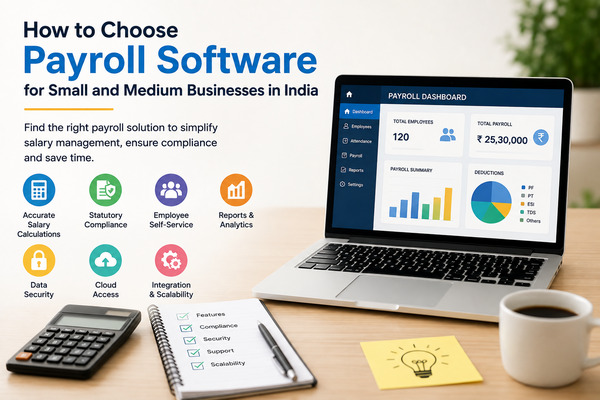
Managing employee salaries, attendance, leave, deductions, tax calculations, payslips, and compliance can become increasingly difficult as a business grows. For small and medium-sized businesses, the right technology can simplify these responsibilities while reducing repetitive HR work. Choosing suitable payroll software can help organizations improve payroll accuracy, automate routine activities, maintain employee records, and create a more organized payroll management system.
The right payroll solution should do more than calculate salaries. Businesses should look for a system that supports automation, compliance, attendance integration, reporting, employee self-service, data security, and scalability. This is particularly important for growing organizations that expect their workforce and payroll requirements to increase over time.
What Is Payroll Software?
Payroll software is a digital system designed to automate and manage payroll-related activities. Depending on the solution, it may handle employee information, salary calculations, deductions, attendance, leave, payslips, payroll reports, and statutory requirements.
Instead of relying on spreadsheets and manual calculations, businesses can use an automated platform to organize payroll information and reduce repetitive administrative tasks.
Why Do Small and Medium Businesses Need Payroll Software?
Small and medium businesses often operate with limited HR resources. When payroll is managed manually, HR teams may spend significant time collecting employee information, checking attendance, calculating salaries, preparing payslips, and maintaining records.
A suitable payroll system can automate many of these activities. This can improve efficiency and allow HR professionals to spend more time on recruitment, employee engagement, performance management, and other strategic responsibilities.
1. Check Salary Calculation Features
Salary calculation is one of the most important functions to consider when selecting payroll technology. The system should be able to handle basic salary, allowances, deductions, overtime, incentives, leave adjustments, and other salary components relevant to the organization.
Businesses should also check whether the software can accommodate different salary structures and employee categories without requiring complicated manual calculations.
2. Look for Attendance and Leave Integration
Payroll and attendance are closely connected. Employee attendance, working hours, overtime, and leave information can directly affect salary calculations.
An integrated system can transfer relevant attendance and leave data into payroll, reducing the need for repeated data entry. This can help minimize errors and make monthly payroll processing more efficient.
3. Evaluate Compliance Management
Businesses in India need to consider applicable payroll and employment-related statutory requirements. The selected software should provide appropriate support for compliance-related calculations, records, reports, and updates.
Before purchasing payroll software india solutions, businesses should understand exactly which statutory features are included and whether the provider regularly updates the system according to applicable regulatory changes.
4. Consider Employee Self-Service
Employee self-service can significantly reduce routine HR queries. A good payroll platform may allow employees to access payslips, salary information, leave details, attendance records, and other relevant information through a secure portal or application.
This improves transparency and reduces the number of basic payroll-related requests handled manually by HR teams.
5. Prioritize Data Security
Payroll systems contain sensitive information such as employee salaries, bank details, personal information, tax data, and employment records. Data security should therefore be a major consideration when selecting a payroll platform.
Businesses should evaluate user permissions, access controls, authentication, data protection, backup procedures, and other security measures before making a decision.
6. Check Reporting and Analytics
Payroll reports can help HR teams and management understand salary expenses, deductions, employee costs, attendance trends, and other workforce information.
When evaluating payroll software in India, businesses should look for customizable reports, downloadable records, payroll summaries, compliance reports, and dashboards that can provide useful information for business decisions.
7. Choose a Scalable Solution
A payroll system that works for 50 employees may not be suitable when the organization reaches 200 or 500 employees. Businesses should therefore consider future growth before selecting software.
A scalable solution should be able to accommodate additional employees, departments, locations, salary structures, and changing payroll requirements without creating unnecessary administrative complexity.
8. Consider HRMS Integration
Payroll is only one part of modern HR management. Businesses may also need recruitment, attendance, leave, employee records, performance management, onboarding, and other HR functions.
Integrating payroll with an HRMS can create a centralized employee management environment. Businesses searching for the best hrms software in Delhi should therefore consider whether the platform offers integrated payroll along with other essential HR functions.
9. Compare Ease of Use and Support
Even a feature-rich payroll system may not deliver good results if employees find it difficult to use. The interface should be simple enough for HR teams to manage regular payroll activities without unnecessary complexity.
Businesses should also evaluate customer support, onboarding assistance, training, documentation, implementation services, and technical assistance before selecting a provider.
10. Compare Pricing and Overall Value
Price is an important factor, but it should not be the only deciding factor. Businesses should compare the total value offered by different providers, including features, implementation, support, upgrades, compliance updates, integrations, and scalability.
A low-cost system may become expensive if it requires significant manual work or additional paid features. Businesses should therefore consider the long-term value rather than focusing only on the initial price.
Why Growing Businesses Need Integrated HR Payroll Technology
As organizations expand, payroll becomes connected with multiple HR processes. Employee data, attendance, leave, salary structures, compliance, and employee services need to work together efficiently.
For additional insights, businesses can read Why Every Growing Business Needs HR Payroll Software in 2026, which explains how HR payroll technology can help growing organizations automate payroll activities, improve efficiency, and manage employee information more effectively. The resource is available from SGC Management Services Pvt. Ltd.
Payroll Software vs Manual Payroll Management
Manual payroll management can work for very small teams with simple salary structures, but it becomes increasingly difficult as employee numbers increase. Spreadsheets require repeated data entry and manual checking, which can increase the possibility of calculation errors.
Automated payroll technology can reduce repetitive work by connecting employee information, attendance, leave, salary calculations, payslips, and reports within a structured system. This makes automation particularly valuable for growing businesses.
How to Select the Right Payroll Solution in India
Before selecting a payroll solution, businesses should first identify their requirements. Consider the number of employees, locations, salary structures, attendance system, compliance needs, HR processes, reporting requirements, budget, and expected future growth.
Organizations should then compare providers based on functionality, security, integrations, ease of use, support, scalability, and total cost. A demonstration or trial can also help HR teams understand whether the platform is suitable for their daily payroll operations.
Benefits of Choosing the Right Payroll System
A suitable payroll system can provide several advantages, including:
- Faster payroll administration
- Reduced manual data entry
- Improved salary calculation accuracy
- Better attendance and leave integration
- Easier payslip generation
- Organized employee records
- Improved reporting
- Support for compliance-related activities
- Greater employee transparency
- Better scalability for growing organizations
Conclusion
Choosing the right payroll technology is an important decision for small and medium-sized businesses in India. The ideal solution should combine accurate salary calculations, automation, attendance and leave integration, compliance support, employee self-service, security, reporting, and scalability.
Businesses should not select a solution based on features or price alone. Instead, they should evaluate how effectively the platform can support their current requirements while adapting to future growth. A well-chosen payroll software solution can reduce administrative workload, improve efficiency, and help HR teams focus on more strategic business priorities.
For organizations looking to streamline payroll and HR operations, SGC Management Services Pvt. Ltd. offers payroll and HR technology solutions designed to support growing businesses. Contact us SGCMS to discuss your requirements and find a suitable solution for your organization.
Frequently Asked Questions
1. What is payroll software?
Payroll software is a digital solution that helps businesses automate and manage salary calculations, deductions, payslips, employee records, attendance, leave, reporting, and other payroll-related activities.
2. Why should small businesses use payroll software?
Small businesses can use payroll software to reduce manual work, improve calculation accuracy, organize employee records, simplify payroll administration, and save valuable HR time.
3. What features should businesses look for in payroll software?
Important features include salary automation, attendance and leave integration, compliance support, employee self-service, reporting, data security, scalability, HRMS integration, and reliable customer support.
4. Can payroll software help with statutory compliance in India?
Yes, many payroll solutions provide features that support applicable statutory calculations, records, and reports. Businesses should verify the specific compliance capabilities and update practices of the provider before selecting a solution.
5. How do I choose the right payroll software for my business?
Consider your employee strength, payroll complexity, HR requirements, compliance needs, budget, integrations, security, scalability, ease of use, reporting, and customer support. Comparing these factors can help you select a solution that meets both current and future business needs.